Objects and shapes speak more than what we could hear. They show more than what we could comprehend. We do not hear or see them because we are in a hurry. But people who have a sense of displacement and detachment with the places that they chose to live and its temporalities, are blessed with these accented sensory powers; they could hear the objects and shapes speak and what they try to show. Harpreet Singh made Delhi his home quarter of a century ago, leaving a series of glamorous jobs including graphic designing, television scripting, anchoring and acting, and since then he has been listening to the whispers of the city and seeing those layouts that are generally overlooked by the commonfolk. The uncommonness of Delhi’s physical appearance, as perceived by Harpreet could be seen in his array of micro sculptures, assemblages and defiantly aestheticized visual-scapes painted on various objects and canvases.
The methodical madness of a city like Delhi and the growing suburb of Noida where the artist currently lives is palpable in all these works. However, beyond the physical appearances and the ‘organized chaos’ as he calls it, there are more layers that are to be discussed, debated and put into perspective. The point of departure for Harpreet is his fascination for the ‘brutal architecture’ style that has no dearth in Delhi and Chandigarh, which happens to be his place of birth and growing up. The Corbusian layout and design of the ‘perfect city’ of India, reduced the Punjabi Baroque into smithereens and remade them into a series of fascinatingly minimal architectures, giving an illusion of modesty, sobriety and structured mobility. Corbusier was perceptive enough to hide the ‘rudeness’ of the brutal architecture propagated by the Soviet architects in the erstwhile USSR but he subscribed to its ‘brutal minimalism’ minus the authoritative arrogance.
Harpreet’s works are inspired by the intangible qualities of these tangible brutal architectures that still in many ways define the never-say-die modernising processes of his chosen city of Delhi. If Chandigarh is a project unmistakably completed and fused with history, Delhi, in our artist’s eyes, has been a city that has never completed any project to its perfect completion. This ongoing chaos in making and unmaking of the physical localities and the pushing and pulling of the demographic complexions in and around it, have resulted in a topography more fluid than ever. Harpreet sees this fluidity, this packing and unpacking of spaces, raising and collapsing of structures, naming and renaming of roads and many other conflicting binaries as the triggers of his works of art. In everything that he confronts in this city, Harpreet sees a chaotic city in its miniature format.
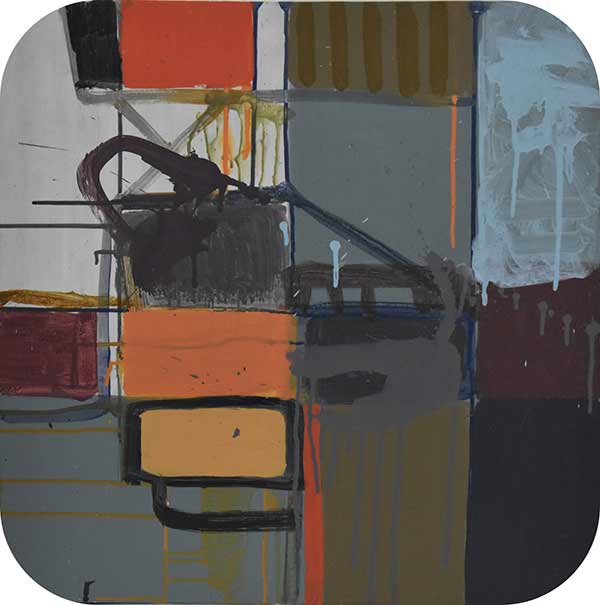
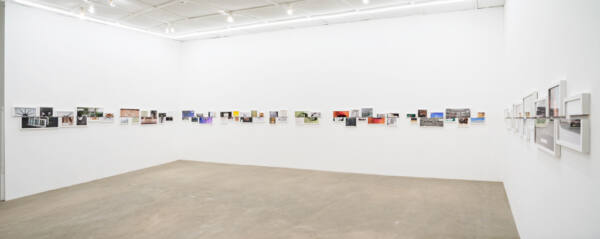
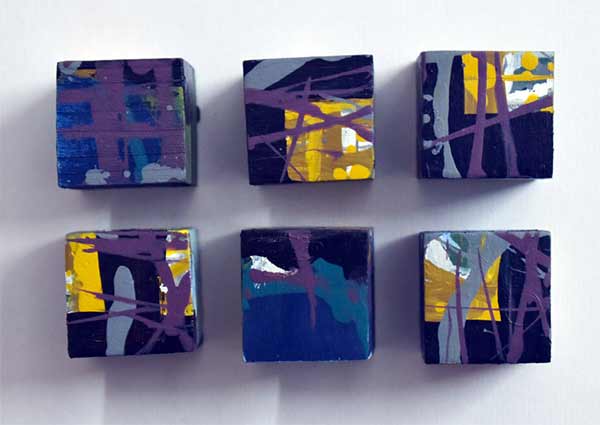
Interestingly, Harpreet does not depend his aesthetic upon the actual creation of structures using painterly or sculptural modes. On the contrary, he takes pleasure in seeing these structures embedded in the micro-structures like dismantled packaging materials, de-structured found objects, pop-up books abandoned by kindergarten schools, classroom objects like miniature models of architectures created out of boxes and anything that has gone out of use or forced into a new use, as his primary art materials. Harpreet considers or treats these materials as alphabets of a language that is constantly evolving through use, disuse, abuse and overuse. A package, when dismantled, opens itself as a shape which in turn resembles the layout of a complicated housing project or multi-purpose architecture. Certain other packaging materials, when freed from their clips, spread out before him as lay out of the city councils or museums. As he brings them on the working table in his studio, Harpreet turns himself to be the maker of a new world where the old alphabets become the new syllables of an extremely private language to be shared between like-minded people.
Languages and objects, in themselves contain both history and emotions. The objective coldness of history is warmed up when emotional content is infused in them through the alteration of shapes and colours. These repurposed objects in Harpreet’s creative works speak to the viewers through their power to evoke histories and emotions. The object feeling is twice communicated in his works as the primary level of communication starts with the recognition of it as an art object with its own space and space within the history of aesthetical productions. The second identification is the realization of its fundamental structure, the remote memory of a language that was once in parlance, as a packaging material or a pop-up book, which in turn takes the viewers to their emotional histories. There is something cathartic about such identifications, but without any sentimental grandiloquence.
Piet Mondrian, when he moved to New York, created one of his major masterpieces titled ‘Broadway Boogie Woogie.’ This painting is created out of grids, a major modernist trope, which communicated structured thoughts, physical environments and developmental aspirations. The modernist categorizing tendencies for hierarchical governance and disciplining of the subjects used to get reflected in the grids, which also became fundamental to the layouts of the planned cities. Mondrian by instinct understood these from his days in Manhattan and in 1943 he created the historical painting that still reflects the mood of a big city with all its traffic, lights, sound and above all the perpetual confusion and wonderment of the immigrant. To me, Harpreet’s works function as a tribute to the masters of the 1940s who captured the essence of a war-torn world and its determination to build it back to normal.
Harpreet seeks a normal world within the organized chaos of the big cities. He is like the ancient mad philosopher, Diogenes who searched for a real human being with a lamp in his hand in the glaring day light. The seeking, perhaps would be seen as absurd, but beyond its peripheral appearance, it holds deeper truth about life and the structures and crannies where it flourishes. Harpreet Singh carries the city in its objects. Any art form with an object shape or object essence invests a lot in its tangible qualities. Harpreet Singh asks you to come closer and see what you have not yet seen and hear what you have not yet listened to.
Johny M L
Art Historian and Curator
New Delhi, December 2025