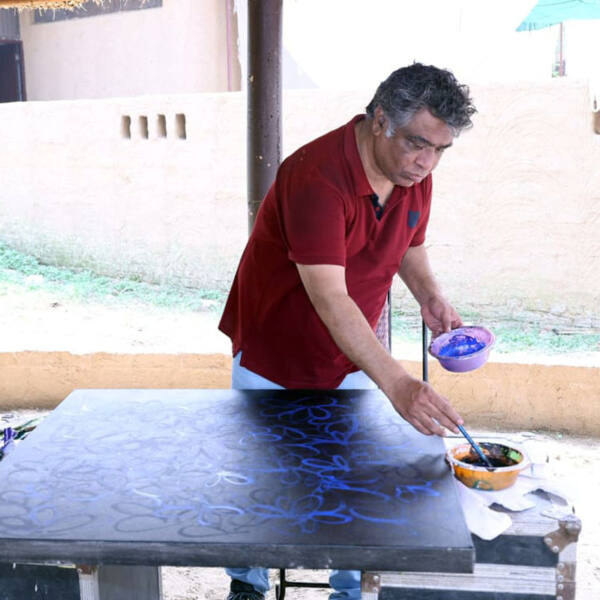
Shanker Art Foundation
ARTinfoINDIA.COM – Contemporary Art Platform | Buy & Sell | Connect with Artists | Explore Exhibitions

The art of Sushil Abhua occupies a distinctive space within contemporary Indian visual culture, where imagination, memory, and environment converge into intricate visual narratives. His works are neither purely figurative nor entirely abstract; instead, they exist in a fertile in-between realm where organic forms, human presence, and symbolic elements merge to create evocative inner landscapes. Abhua’s practice is deeply rooted in observation, yet it moves beyond literal representation to explore the emotional and philosophical dimensions of existence.
At the heart of his oeuvre lies a profound engagement with nature. Birds, trees, architectural fragments, and flowing organic patterns recur throughout his compositions, forming complex ecosy stems on paper and canvas. These motifs are not decorative additions but vital components of a larger conceptual framework. They suggest the interconnectedness of all living things and reflect the artist’s belief in harmony between humanity and the natural world. His imagery often feels like a visual meditation on growth, transformation, and continuity.
Abhua’s technique is characterized by meticulous line work and layered detailing. Using pen, ink, and subtle tonal variations, he builds dense surfaces that invite slow, contemplative viewing. Every stroke appears deliberate, contributing to a rhythmic visual texture that echoes the patterns of nature itself. The precision of his draftsmanship contrasts with the fluidity of his themes, creating a dynamic tension between control and spontaneity. This balance lends his works a quiet intensity, drawing viewers into an intimate dialogue with the image.
Human figures appear frequently in his paintings, yet they are rarely portrayed as isolated individuals. Instead, they dissolve into surrounding forms, becoming part of larger cosmic or ecological structures. Faces blend into landscapes, bodies transform into branches, and identities become fluid. Through this visual strategy, Abhua questions rigid boundaries between self and environment, suggesting that personal identity is inseparable from collective and natural contexts.
Many of his recent series, such as Interwoven Existence, Mythic Voyage, and Sacred Confluence, explore themes of memory, migration, and inner reflection. These works evoke a sense of journey, both physical and psychological. Architectural references hint at passageways, thresholds, and sacred spaces, reinforcing the idea of art as a medium for spiritual and emotional transit. Silence, stillness, and introspection are recurring moods, inviting viewers to pause and look inward.
Color in Abhua’s work is often restrained, allowing form and line to take precedence. When employed, it functions symbolically, golden tones suggest sanctity and continuity, while earthy hues evoke rootedness and belonging. This thoughtful use of palette enhances the meditative quality of his compositions and reinforces their conceptual depth.
Ultimately, Sushil Abhua’s art is an exploration of coexistence between tradition and modernity, the personal and the universal, the visible and the unseen. His paintings do not impose meanings; they gently propose them, encouraging reflection rather than conclusion. In an increasingly fragmented world, his visual language offers a space of quiet connection, reminding us of the subtle threads that bind all forms of life. Through patience, sensitivity, and imaginative rigor, Abhua continues to craft a body of work that speaks to both the eye and the soul.
Showing all 10 resultsSorted by latest
-
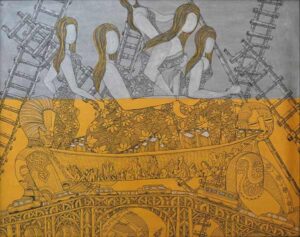
Golden Passage
₹170,000.00 INR Add to cart -
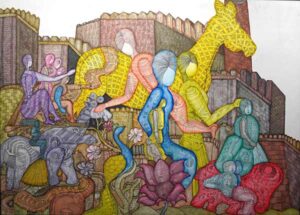
Red Fort
₹484,000.00 INR Add to cart -
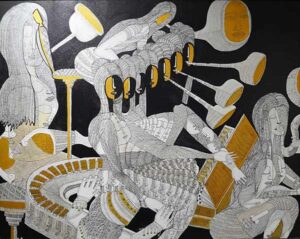
Women Orchestra
₹175,000.00 INR Add to cart -
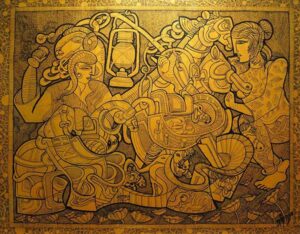
Illuminated Labour
₹181,000.00 INR Add to cart -
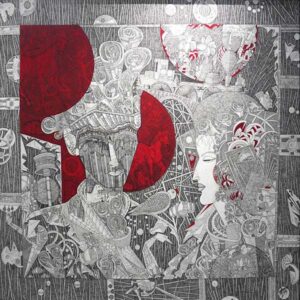
Crimson Reverie
₹624,000.00 INR Add to cart -
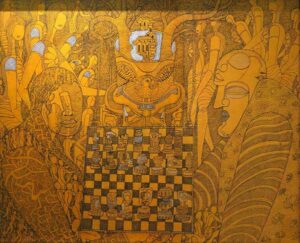
Primal Harmony
₹170,000.00 INR Add to cart -
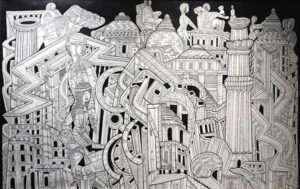
Cosmopolitan City
₹350,000.00 INR Add to cart -
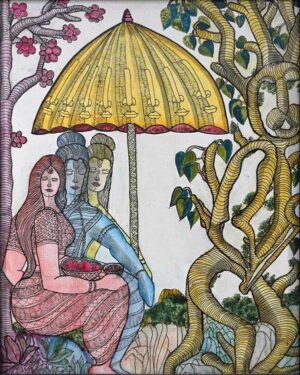
Sacred Exile
₹31,000.00 INR Add to cart -
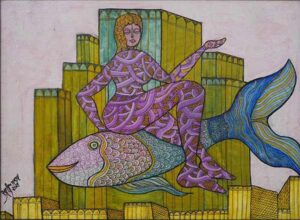
Mythic Voyage
₹36,000.00 INR Add to cart -
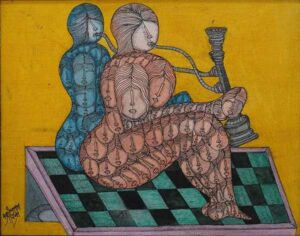
Mythic Communion
₹36,000.00 INR Add to cart