
New Delhi, India — Bridge Bharat has unveiled Fields of Chamba, a year-long, research-driven body of Chamba Rumals developed through archival study, botanical mapping, and studio-authored design, realised in collaboration with Padma Shri Lalita Vakil and her atelier of master women artisans in Himachal Pradesh.

At the heart of the series lies a botanical vocabulary drawn from the Chamba Valley itself—native flowering shrubs, sacred trees, wild creepers, and seasonal plant life embedded in the region’s visual and cultural memory. These are not imagined motifs but forms artisans encounter in everyday life: along temple paths, across agricultural fields, and at the thresholds of forest and home. Their translation into embroidery brings together lived ecological knowledge and hereditary technical mastery, grounding each work in a deeply specific geography.
The project began with documentation and close analysis of historic Rumals, examining their compositional logic, stitch structure, and vegetal language. This was expanded through academic research into Himalayan flora, resulting in original drawings created by the Bridge Bharat design studio specifically for translation into the technically exacting double-sided embroidery that defines the Chamba Rumal tradition.

Executed over more than 1,000 hours by 13 artisans, the works represent both artistic continuity and innovation. A key material advancement in Fields of Chamba is the use of handwoven Bengal muslin — significantly finer than cotton traditionally associated with the form. Its delicacy makes embroidery far more demanding, as each thread movement remains visible and irreversible, while lending the finished works a translucent, light-responsive quality. The imagery appears almost suspended within the cloth, positioning the Rumal as a display-led textile artwork suited for contemporary interiors and collectible contexts.
While rooted in a specific Himalayan valley, the botanicals speak to a broader global moment where place-based knowledge, fragile ecologies, and material authorship are reshaping collectible design. These altitude-specific plant forms, observed and transmitted across generations, function as a visual ecological record — giving the works cultural and geographic provenance that resonates internationally.
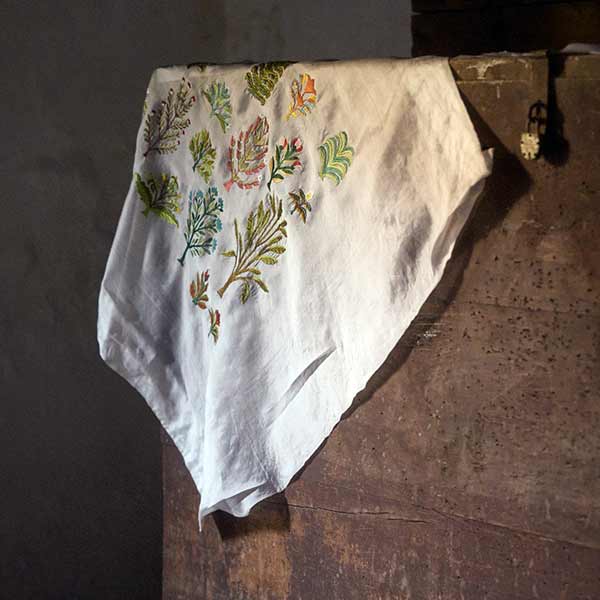
Historically embedded within the Pahari visual tradition, Chamba’s flora has long signified seasonality, devotion, and sacred landscape. In this series, it also becomes a contemporary ecological archive, allowing the textile to operate simultaneously as cultural object, time record, and authored work of art.
“In Fields of Chamba, the archive, the landscape, and the artisan’s lived experience come together,” said Aakanksha Singh, Founder, Bridge Bharat. “By developing original compositions through rigorous research and translating them through a discipline that demands extraordinary precision, we are extending the language of the Rumal while creating sustained, high-value work for the artisans who hold its technical knowledge.”
Conceived as part of Bridge Bharat’s long-term vision to build a global platform for India’s heritage art practices, the series establishes a model where research, design authorship, material innovation, and generational skill function as a unified ecosystem — positioning the Chamba Rumal within the international category of museum-grade collectible textiles.

Project Highlights
- Collection Title: Fields of Chamba
- Research & Design: Bridge Bharat studio (archival study and original drawings)
- Artisan Collaboration: Padma Shri Lalita Vakil and atelier, Chamba
- Artisans Involved: 13 master women artisans
- Development Period: 1 year
- Embroidery Hours: 1,000+ hours
- Material: Handwoven Bengal muslin with silk floss
- Technique: Double-sided Chamba Rumal embroidery
- Concept: Botanicals of the Chamba valley interpreted through archival, academic, and lived landscape knowledge
- Format: Limited body of collectible textile artworks
About Bridge Bharat
Founded in 2022, Bridge Bharat is a design platform focused on sharing Indian art, culture, and storytelling globally. It collaborates with 50 legacy artist families across India to create collectible works blending traditional techniques with contemporary design. The organisation ensures authenticity, provenance, and cultural context while supporting sustainable livelihoods for artists. Over the past two years, it has helped increase annual incomes for more than 100 artists and represents 50 artist communities, including Padma Shri and National Award recipients.
Bridge Bharat is led by Aakanksha Singh, an alumna of IIM Ahmedabad, and benefits from an advisory network that includes leaders from organisations such as Google India, Delhivery, and Paytm,.
Bridge Bharat partners with architects, designers, institutions, and public organisations to integrate Indian art into contemporary spaces and narratives.