I went to the Museum of Word at the National Library thinking I was going to see the history of words. I came away thinking about how many different forms a word can take.
We usually imagine a word as something printed on a page, a line of ink, a sentence in a book, a handwritten note. But inside the Museum of Word, words seemed to have escaped the page. They appeared as inscriptions, manuscripts, paintings, decorative objects, performing arts, scripts and, eventually, digital forms.
What stayed with me most was the relationship between words and images. I have always thought of writing as something that creates pictures in the mind. A sentence describes a landscape, and we imagine it. A poem describes a person, and we see them. But the museum made me think about the reverse: what happens when a picture becomes a way of expressing a word, an idea or an entire story? The paintings offered one of the most beautiful answers.
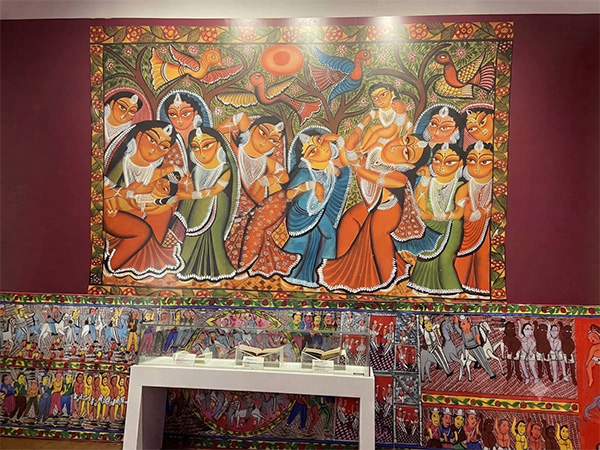
A painting does not need a sentence underneath it to communicate. A face can speak of emotion. A landscape can carry a mood. A gesture can suggest an action. Colours can create an atmosphere. In paintings depicting performing arts, this becomes even more fascinating. Dance, music and theatrical traditions can be captured in a single frozen moment, the movement of a dancer, the posture of a performer, the presence of musicians or the expression of an audience. The performance may last only minutes, but the painting preserves its gesture. It turns movement into stillness and sound into something visual.
A dancer’s pose can become a verb. A musician’s gesture can suggest an entire melody. A theatrical scene can contain a story without a single line of dialogue.
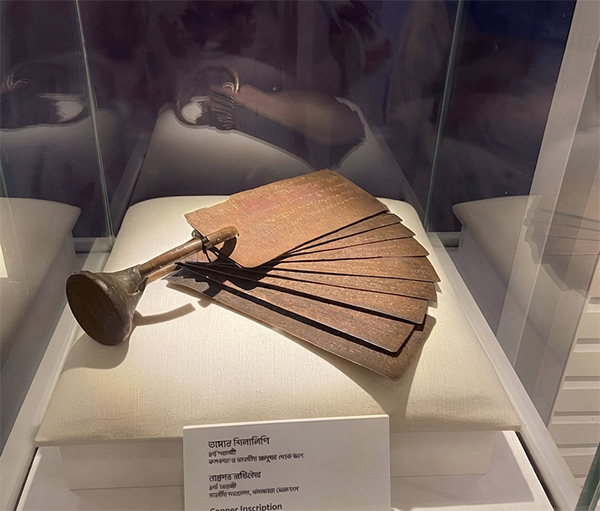
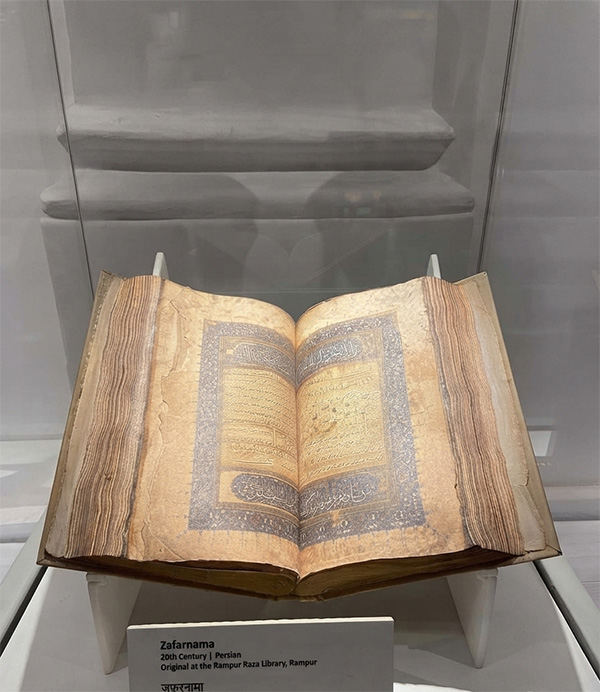
In that sense, these paintings are almost another form of writing. The museum also brought me closer to the physical history of the written word. I came across an eighth-century copper inscription, decorative plates, manuscripts and illustrated traditions that showed how language has been preserved across very different materials and artistic forms. A word could be carved into metal, written by hand, incorporated into decoration or accompanied by an image.
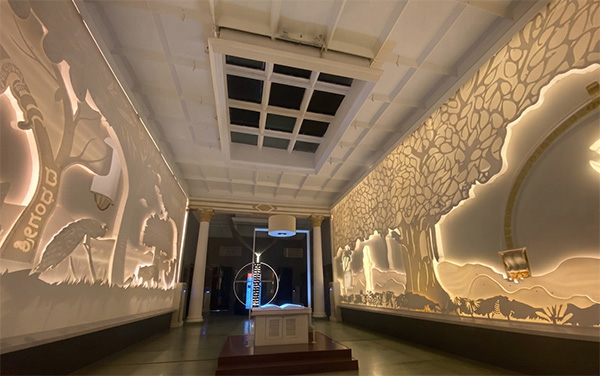
Then came the story of the printing press, the moment when words could suddenly travel further and reach more people. Yet even printed words were never completely separate from visual art. Typography, illustrations, ornamentation and page design all became part of how a story was presented.
This made me think about my own relationship with writing. I have been creating a manuscript digitally, typing words onto a screen rather than writing them by hand or sending them to a printing press. It is astonishing how different the technology is from the copper inscriptions and manuscripts I was seeing, and yet the intention feels exactly the same, to preserve an idea and give it a form that can outlive its creator.
That is perhaps what makes the National Library such an appropriate home for the Museum of Word. The institution itself has a long history of preserving knowledge. Beginning as the Calcutta Public Library in 1836, it later became the Imperial Library and, after Independence, the National Library. Today, it remains one of India’s important institutions for preserving books, manuscripts and the country’s intellectual heritage.
Walking through the museum, I realised that the history of words is not simply the history of writing. It is also the history of how human beings have tried to make meaning visible, sometimes through a manuscript, sometimes through a copper inscription, sometimes through a printing press, sometimes through a painting of a dancer in motion and now, sometimes through a digital manuscript created on a screen.
Perhaps words have never belonged only to pages. They have always been looking for new forms.
And perhaps that is the quiet magic of the Museum of Word, it allows us to see language not merely as something we read, but as something we can see, imagine, perform and remember.